Hey everyone, thanks for swinging by my little corner of the web. I’m Jake, and I’ve been running the show at my 16A distribution box supply company for 7 years now. When folks ask me the wildest question I get after “do you ship to Alaska in winter?” it’s gotta be “can a 16A distribution box work in a corrosive environment?” Most electricians I talk to brush it off at first, like “corrosive stuff’s not my problem”… until they show up to a job where their last box corroded to mush in 6 months. That’s the stuff that makes me dive into this topic. 16A Distribution Box

First, let’s get real about what a corrosive environment actually means. It’s not just “a little messy garage” – think factories where they make battery acid, wastewater treatment plants, coastal areas with constant salt spray, even car washes where harsh detergents get sprayed nonstop. Corrosion here isn’t just an eyesore; it eats through metal, seizes screws, and turns electrical connections into a fire hazard faster than you can say “circuit breaker trip.” Most basic 16A distribution boxes you pick up at the big box store use cheap steel or thin aluminum with a flimsy paint coat that chips the second you look at it wrong. These are the ones that die fast in corrosive spots.
Now, let’s talk about what makes a 16A box “corrosion-resistant” vs. “corrosion-proof” – there’s a huge difference here. I used to swear by stainless steel, but not all stainless is created equal. A lot of brands sell 304 stainless for cheap, but that cuts corners on molybdenum, which is the magic stuff that stops salt and acids from eating through. I’ve seen a 304 box fail in a coastal Florida job where the salt levels were extra high – turns out it needed 316 stainless, which has way more of that protective molybdenum. Then there’s plastic: not just any plastic, but UV-stabilized, chemical-resistant thermoplastics like polycarbonate or nylon. I’ve tested cheap polycarbonate that cracked after a month near a chemical plant, but the high-grade stuff can handle most acids, alkalis, and salt spray without breaking a sweat.
Wait, but let’s not skip the small parts that people sleep on. The main box might be tough, but what about the terminal screws? Basic steel screws will rust through overnight in corrosive environments. That’s why all our 16A distribution boxes use marine-grade stainless steel terminals – they’re a little pricier, but if a screw fails mid-shift at a wastewater plant, that’s way more expensive than splurging on good hardware. Even the gaskets matter: cheap rubber gaskets crumble in chemicals, but EPDM gaskets stay flexible, so they keep corrosive moisture out of the box even when it’s exposed to hoses or rain.
I get why some folks try to cut corners here. A basic 16A box is $20, while a corrosion-resistant one is $45 – that’s a big difference, especially on a big job. But let’s do the math: if that $20 box fails in 6 months, you’re looking at downtime, rework, maybe even a safety callout that runs into hundreds or thousands of dollars. I had a client a couple years back who put basic boxes in a coastal marina – they were replacing 12 boxes every 8 months. Switched to our corrosion-rated 16A boxes, and 3 years later, they haven’t had to touch a single one. That’s a no-brainer, right?
Now, let’s address the gray areas because this isn’t a one-size-fits-all answer. If your “corrosive environment” is a little damp garage with occasional lawn chemicals, a basic steel box with a powder coat might work for a couple years. But if it’s something like a food processing plant where they wash floors with strong bleach solutions, or a chemical storage facility, you can’t get away with cheap stuff. Even our 316 stainless boxes won’t handle hydrofluoric acid, so we always ask clients to tell us exactly what kind of corrosion they’re dealing with before we recommend anything – that’s not overcomplicating it, that’s saving them a headache.
Another thing people don’t talk about: installation matters even as much as the box itself. If you mount a 16A distribution box where it’s sitting in standing water (say, near a sump pump without a drain), even the toughest box will corrode fast. We always tell clients to mount boxes at least 12 inches above any potential water line, make sure the cable entry points are sealed tight with cable glands to keep moisture and chemicals out, and never skip the ground wire – that tiny detail prevents stray currents that accelerate corrosion. I’ve seen a client mount a box wrong and have it corrode in 3 months, then blame the box instead of their own install. Ugh, that’s frustrating.
Wait, let’s bust a common myth here: some folks think corrosion resistance only applies to industrial jobs, but coastal home projects count too. I had a homeowner in South Carolina reach out last year – he’d been replacing his garage electrical box every year because of salt spray off the ocean. We sent him a small 16A distribution box made with marine-grade thermoplastic, and a year later he texted me saying it still looks brand new. That’s not just for factories – it’s for anyone near the coast, or even people who use harsh fertilizers or pesticides in their yards near electrical gear.
I’ll be honest, we’ve had clients who refused to go with corrosion-resistant boxes, and they’ve all come back. Last month, a guy who installed basic boxes at a car wash called me panicking because 5 of his boxes had corroded so bad the breakers wouldn’t flip. He had to pay to rewire the whole spot, and that cost him way more than the initial investment in our boxes would have. That’s why I’m upfront with every potential client: if the environment is even slightly harsh, don’t cheap out on the box.
Now, what about certification? A lot of “corrosion-resistant” boxes out there are just labeled that for marketing. We make sure all our 16A distribution boxes meet IP67 certification for dust and water resistance, and we test every batch in a salt spray chamber for 1,000 hours – that’s the industry standard to make sure they don’t fail fast. If a box can’t pass that test, it’s not worth putting on a job. I’d rather lose a sale than sell a box that’ll leave a bad review in a year.
Let’s wrap this up: yes, a 16A distribution box can work in a corrosive environment – but only if you pick the right one, and install it right. Basic cheap boxes won’t cut it, but high-grade stainless (specifically 316) or UV-stabilized, chemical-resistant thermoplastics, paired with marine-grade hardware and proper installation, will last way longer and save you from costly rework. At the end of the day, electrical gear in harsh spots isn’t just about working – it’s about being safe. A corroded connection can cause a fire, and that’s way bigger than a few extra bucks on a box.
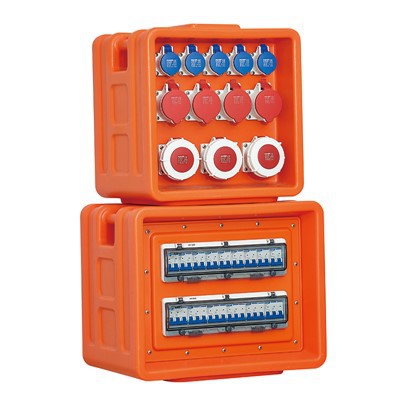
If you’re dealing with a corrosive environment – whether it’s a factory, marina, car wash, or coastal home – and you need a 16A distribution box that’ll hold up, hit me up to chat. I can walk you through exactly what kind you need, no sales pitch, just straight talk from someone who’s been in this for years.
Rubber Distribution Box References:
- National Electrical Code (NEC) Article 314, Enclosures for Electrical Equipment
- ASTM B117, Standard Test Method for Salt Spray (Fog) Testing
- International Electrotechnical Commission (IEC) 60529, Degrees of Protection Provided by Enclosures (IP Code)
- Coastal Electrical Equipment Corrosion Study, National Fire Protection Association (NFPA) 2021
Apeks Electric Co., Ltd.
As one of the leading 16a distribution box manufacturers and suppliers in China, we also support custom service. With abundant experience, we warmly welcome you to wholesale high quality 16a distribution box from our factory. Welcome to view our website for more information.
Address: No.2 Yuyao Rd, Yuxin, Nanhu District, Jiaxing, China
E-mail: kevin@apekselectric.com
WebSite: https://www.powerdistros.com/
