If you’ve ever stood inside a power plant—whether a coal-fired facility billowing steam, a natural gas generator humming through peak demand, or a combined cycle plant balancing intermittent renewable output—you know every component has to pull its weight. These sites run 24/7, under extreme pressure, at temperatures that make standard plumbing materials buckle, and they can’t afford unplanned shutdowns. As a stainless steel flexible hose supplier, I get asked all the time: “Can a stainless steel flexible hose actually hold up in a power plant?” The short answer is yes—but not every hose is made for the job. Let me walk you through what it actually takes, from the specs that matter most to the real-world use cases I’ve seen first-hand across dozens of power generation sites over the last 12 years. Stainless Steel Flexible Hose

First, let’s talk about the conditions that make power plant piping so brutal. I was on a natural gas combined cycle plant in the Gulf Coast three years ago, during a routine maintenance check, and I saw what happens when the wrong hose is used: a braided rubber hose on the steam feed line to the heat recovery steam generator (HRSG) failed after just 18 months, leaking superheated water at 750°F and 1,200 PSI. The plant had to shut down two of three units for two weeks, costing them an estimated $2.3 million in lost generation. That’s the kind of mistake stainless steel flexible hoses were designed to prevent. The core of the issue here is that power plants have two main fluid paths that rely on hoses: high-temperature, high-pressure steam and gas lines, and auxiliary systems like lube oil, cooling water, and chemical injection. Standard flexible hoses—usually rubber, EPDM, or even plain braided metal without the right specs—just can’t handle the swings in temperature and pressure that come with daily startup and shutdowns, not to mention the constant vibration from turbines and generators.
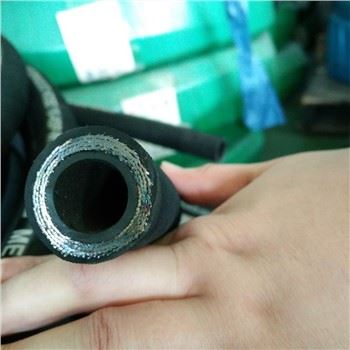
When we talk about stainless steel flexible hoses for power plants, it’s not the cheap, garden-variety hose you might see at a hardware store. These are custom-built with three key components: the inner corrugated hose, the braided stainless steel jacket, and the end fittings. The inner hose is almost always 304 or 316L stainless steel. I always recommend 316L, even when sites try to save a few bucks on 304, because 316L has molybdenum in its alloy, which makes it far more resistant to corrosion from saltwater in coastal plants, sulfur compounds in coal plant flue gas, and acidic chemicals used for boiler water treatment. The corrugated design is non-negotiable too: it lets the hose flex and absorb movement without cracking, unlike a smooth-walled metal pipe that would split under thermal expansion. The braided jacket’s job is to contain pressure, so for a steam line, you need a double-braided jacket, not single, to handle that kind of PSI. And the end fittings? They have to be butt-welded to the inner hose, not crimped or clamped. I’ve seen too many sites cut corners with crimped fittings that pull loose after a few thermal cycles, leading to leaks.
Now, let’s get to the real-world applications where these hoses shine. The first is steam and gas transmission lines. Every power plant has steam headers that run between the boiler, turbine, and HRSG. When a plant starts up, those headers expand by inches as they heat up, and they vibrate from turbine rotation. A rigid steel pipe would have to install expensive expansion joints to compensate, but a stainless steel flexible hose can absorb that movement on its own, reducing the need for additional components that could fail. At a mid-sized coal plant in the Midwest I’ve worked with for eight years, we replaced 12 rigid pipe expansion joints on their main steam line with custom 4-inch stainless steel hoses rated for 1,000 PSI and 850°F, and they haven’t had a leak or maintenance issue in six years. Another big use case is lube oil and hydraulic systems. Turbines rely on high-pressure lube oil to keep their bearings running smoothly, and those lines need to flex as the turbine moves during startup and shutdown. A rubber hose here would degrade from the high pressure and oil over time, but a stainless steel hose rated for compatible oil and temperatures lasts for the full life of the turbine, sometimes 20 years or more.
Cooling water systems are another area where these hoses add value. Power plants use millions of gallons of cooling water every day, either from a river, lake, or cooling tower. Those lines can have consistent pressure swings from flow fluctuations, and they’re exposed to corrosion from minerals in the water and even occasional biological growth. At a nuclear plant in the Southeast, we installed stainless steel flexible hoses on their emergency cooling water backup lines, which are only used during shutdowns or unplanned outages. The last thing they need is a failed hose when they’re relying on backup systems, so the corrosion resistance of 316L stainless steel is critical there. Flue gas desulfurization (FGD) systems too—those are the systems that remove sulfur from coal plant emissions, and they use a mixture of water, lime, and sulfur compounds. Those lines are highly corrosive, and a stainless steel hose with a PTFE liner can handle that mix far better than rubber or carbon steel. I’ve seen rubber hoses in FGD systems fail in less than two years, but the stainless steel ones we’ve installed have been going strong for five years, with no replacement needed.
But here’s the thing: stainless steel flexible hoses aren’t a one-size-fits-all solution for power plants. I get calls from plant managers who want to use a cheap hose for a high-pressure steam line, and I have to explain why that’s a bad idea. The biggest mistake people make is underrating the temperature and pressure ratings. For example, a hose rated for 300 PSI at room temperature will only handle 150 PSI at 700°F—pressure drops sharply as temperature rises, and power plant lines operate at extreme temps every day. Another mistake is not accounting for the hose’s movement and bending radius. If a hose is required to flex 90 degrees during startup, you can’t use a hose with a tight bending radius—you have to size it for the expected movement, otherwise it will kink and split. Corrosion is another big factor: if a plant is in a coastal area where salt air is present, or uses high-chloride boiler water, you need 316L stainless steel, not 304. I once worked with a plant that used 304 hoses on their saltwater intake lines in Texas, and after three years, the hoses started pitting and leaking—swapping them for 316L stopped the issue entirely.
There are also strict industry standards that power plants have to follow, so any hose used has to meet those. The most common standards for power generation are ASME B31.1 (Power Piping) and the American Petroleum Institute (API) standards for gas and oil lines. As a supplier, I make sure every hose we provide is third-party tested to meet ASME B31.1, so plant managers can be sure it’s compliant for inspections. Non-compliant hoses can lead to failed audits, or worse, accidents. I remember a plant in Ohio that tried to cut costs with an unrated hose on their boiler feed line, and during an inspection, the hose failed the pressure test. They had to replace it at a much higher cost than if they’d ordered a compliant one initially, and they got hit with a $12,000 fine from the OSHA inspection that followed.
Another advantage of stainless steel flexible hoses for power plants is their durability and long-term cost savings. I know upfront costs can be higher— a 4-inch stainless steel hose costs 3 to 5 times more than a rubber hose. But when you calculate the total cost: no unplanned shutdowns, no emergency repairs, fewer replacements, and lower labor costs because you don’t have to shut down the entire unit to swap out hoses, they pay for themselves in 18 to 24 months. Take that coal plant I mentioned earlier: their initial order of 12 expansion joint replacements cost $18,000 for the stainless steel hoses, but the lost revenue from that two-week shutdown in 2019 was $2.3 million. That’s a no-brainer. I also have a client that operates a combined cycle plant in Arizona, where temperatures reach 115°F in the summer—their rubber hoses would expand and contract every day, leading to leaks every year. Swapping to stainless steel hoses eliminated those annual leaks, and they’ve saved over $140,000 a year in maintenance and lost generation.
It’s not just about new builds either. When plants are doing retrofits, stainless steel flexible hoses are a game-changer. Retrofitting a rigid piping system to add flexibility would require cutting pipe, installing expansion joints, and welding, which takes days and requires the unit to be shut down. Stainless steel hoses can be installed in a few hours, with minimal welding, so the plant can get back online much faster. Last year, we worked with a plant that had to upgrade their steam line to accommodate a new turbine, and with rigid pipe, the retrofit would have taken three weeks. Using stainless steel hoses, they had the line back online in 48 hours, avoiding millions in lost revenue.
Now, I’m not saying stainless steel flexible hoses can solve every problem in a power plant. They’re not for low-pressure, low-temperature applications like potable water lines or office plumbing, and they’re not the right choice for every small auxiliary line. But for the critical, high-stress lines that keep the plant running—steam, gas, lube oil, cooling water, and FGD systems—they’re the most reliable, cost-effective option available. Over the 12 years I’ve been a supplier, I’ve seen hundreds of power plants go from high failure rates on their hoses to zero unplanned hose-related shutdowns just by switching to properly specified stainless steel flexible hoses.
If you’re a power plant manager or maintenance engineer reading this, I know how tight margins are, and how every dollar saved on parts feels like a win. But when it comes to components that handle 800°F steam and 1,000 PSI pressure, cutting corners doesn’t save money—it costs you in downtime, fines, and safety risks. I’ve been on enough outage calls at 2 a.m., when a failed hose has a plant offline, to know that the right hose makes all the difference.
At the end of the day, power plants need equipment that works around the clock, no exceptions. Stainless steel flexible hoses, when specified correctly for the exact conditions, do exactly that. If you’re looking to upgrade your plant’s hose systems, or you’re dealing with recurring leaks and failures, reach out to connect to discuss your specific application. I can help you size, specify, and source the right hose for your plant, so you don’t have to worry about unplanned shutdowns. Let’s make your equipment work as hard as you do.
Steam Hose References
- ASME B31.1, Power Piping, American Society of Mechanical Engineers, 2022.
- API 605, Large Diameter Carbon Steel Flanged Valves for Petroleum and Natural Gas Industries, American Petroleum Institute, 2018.
- Occupational Safety and Health Administration (OSHA), Process Safety Management of Highly Hazardous Standards, 29 CFR Part 1910.119, 2021.
- NACE International, Corrosion of Stainless Steels in Industrial Environments, 2020.
- Electric Power Research Institute (EPRI), Flexible Hose and Expansion Joint Best Practices for Power Generation Facilities, 2019.
Hebei Qianli Rubber Products Co., Ltd.
As one of the most professional stainless steel flexible hose manufacturers and suppliers in China, we have world-leading production equipment and strong manufacturing capabilities. Please feel free to buy bulk durable stainless steel flexible hose made in China here from our factory.
Address: West industrial Zone, Jing County, Hengshui City, Hebei Province, China.
E-mail: manager@hebeiqianli.com
WebSite: https://www.qianlirubber.com/
