Hey everyone, if you’ve ever had a hip replacement or a dental implant that actually works long-term, you’ve probably got a hunch titanium’s involved. As a medical titanium bars supplier, I get asked all the time why oxygen seems to be such a big deal when it comes to these tiny, critical metal parts. Most folks just assume metal is metal, but when you’re talking about stuff that goes inside the human body (no take-backs if something goes wrong), oxygen isn’t just a background element here—it’s basically the quiet MVP that makes or breaks whether a medical titanium bar does its job for 20+ years, or ends up being a problem. Let me break this down like I would for a guy who’s ordering his first batch for a new implant project, no boring textbook jargon (well, not too much). Medical Titanium Bars
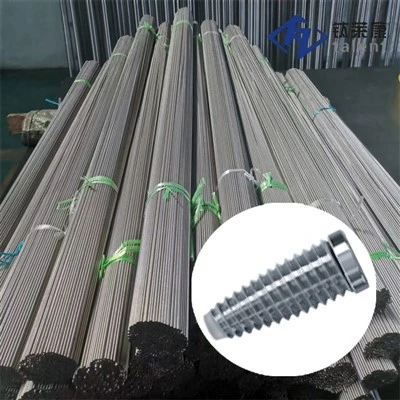
First, let’s start with the basics that even I didn’t fully grasp when I first started in this space: medical-grade titanium is not just plain titanium. The best stuff we supply is Ti-6Al-4V ELI, right? It’s got a tiny bit of aluminum and vanadium mixed in, made specifically for the body. But here’s the thing—raw titanium atoms are super reactive, like, they’ll grab onto anything nearby if they get the chance. So when these bars are made, the second they hit open air (which is 21% oxygen, let’s be real), they form a super thin, almost invisible layer on the surface. Like, it’s only 2-5 nanometers thick—way thinner than a human hair, for reference. Most people would call that rust, but it’s not rust. Rust flakes off, right? This oxygen layer sticks like glue. And that’s exactly why medical titanium doesn’t poison or irritate the body immediately. Wait, but hold on—what happens if that oxygen layer is messed up? That’s where things get tricky.
I’ve had clients reach out to me panicking because they got a batch of titanium bars that “didn’t feel right” after machining, turning out with spots that looked dull instead of that silver sheen we all know. Turns out, those spots were from the oxygen layer being scratched off during the machining process, or not forming at all because the bars were stored in a spot with too little humidity, or even when the machining tool was set too hot. When that thin oxide layer gets damaged, the titanium underneath is exposed. And since the body’s environment is wet, salty, and full of cells that love to attach to stuff, that exposed titanium starts to corrode faster. Not the kind of corrosion that turns your bike chain brown—this is stealth corrosion, slowly leaching tiny titanium ions into the surrounding tissue. No doctor wants that. I had a small ortho implant client a couple years back who switched suppliers because their old vendor was cutting corners on oxygen control during finishing, and half their first batch of femoral stems were getting flagged for premature corrosion. That’s exactly why as a medical titanium bars supplier, oxygen isn’t just something we “deal with” during production—it’s a controlled variable, same as alloy content or dimensional accuracy.
Wait, but oxygen’s not just good when it forms that protective layer. Too much oxygen, and the titanium bar becomes brittle as hell. Let me explain that: when we melt titanium to make these bars, we have to do it in a vacuum or an argon atmosphere, right? Because if oxygen gets in while it’s molten, it dissolves into the titanium crystal structure. Instead of floating as that nice thin surface layer, oxygen atoms get trapped between the titanium atoms, cramming them together. That makes the metal way less flexible. Imagine bending a paper clip—you can bend it back and forth a dozen times before it breaks. If it’s got too much oxygen, it’ll snap on the first bend, like a twig. That’s a huge problem for implants, because hip stems or spinal rods have to flex with the body’s movement, not shatter mid-operation. I’ve turned away a few batches of raw titanium from my upstream suppliers over the years because their oxygen levels were just a tick over the medical standard (which is max 0.13% by weight for ELI grade). It’s a pain, but I’d rather turn down a sale than send out bars that could break inside someone. A customer once asked me, “Why not just add a little extra oxygen to make it stronger?” No. Stronger in a lab test maybe, but in a human body? A broken implant means another surgery for the patient, and that’s on me as a supplier.
Let’s talk about how oxygen plays into long-term performance, too—because that’s what matters most here. The body is a weird, harsh place. It’s got immune cells that float around looking for “foreign” stuff, fluids that have pH levels that can shift depending on inflammation, even bacteria that love to hang out in implant sites. The protective titanium oxide layer? It’s not static. It actually grows over time as it reacts with oxygen in the blood and tissue fluid. So instead of wearing away, it gets more durable the longer it’s inside the body. I’ve seen 30-year-old dental implants that look like they were put in last year, all because that oxygen layer did its job. But here’s a catch: if the implant site has low oxygen levels—like, if a patient has poor blood flow from diabetes or something— that oxide layer doesn’t grow right. It stays thin, it’s porous, and bacteria can sneak under it, causing infection. That’s a big deal for post-op patients, and it’s something that’s linked back to both the quality of the titanium bar’s initial oxide layer and the body’s own oxygen levels. As a supplier, we don’t control a patient’s blood flow, but we do make sure the bars we send have a consistent, intact oxide layer so the body can build on that.
Another thing I get asked a lot: what about surface treatments? A lot of clients do plasma spraying or acid etching on their titanium bars to make them bond better with bone. Do those treatments mess with the oxygen layer? Hell yeah, they can, if you don’t do them right. If you etch the titanium too harshly, you strip away that protective oxide layer and leave the bare metal exposed, which as I said before, causes corrosion. Or if you do a plasma spray without properly pre-treating the surface to re-grow the oxygen layer after etching, the bond between the coating and the titanium bar is weak, and it can flake off inside the body. I had a dental implant client last year who was having high failure rates with their first batch of bars—turns out their contractor was skipping the oxygen regeneration step after etching, just to save 10 minutes per bar. We fixed that by adding our own post-treatment oxygen exposure in a controlled chamber before shipping, and their failure rate dropped by 70% within a quarter. That’s the kind of detail that makes a good medical titanium bars supplier, not just someone who boxes up metal and sends it out.
Wait, let’s address the elephant in the room: is there any scenario where oxygen is bad for medical titanium bars? Yeah, but it’s almost always a quality control issue, not a natural thing. I’ve heard horror stories from old suppliers (like guys who’ve been in the game for 40 years, seen it all) where they shipped bars that were stored in a humid warehouse for months, so the surface oxygen layer got too thick and flaky. Or bars that were machined at temperatures over 200°C, which made the oxide layer crack instead of smooth. Those are avoidable, but only if you’re paying attention to oxygen at every step of the process—from melting the raw material, to machining, to surface finishing, to storage and shipping. We even bag our bars in nitrogen-purged packaging so they don’t react with any extra oxygen before the client gets them to their facility. Small stuff, but it makes a huge difference.
Let’s put this in perspective for anyone who’s actually buying these bars for an implant project. When you’re looking for a supplier, you probably check alloy grade, dimensional tolerance, surface finish—all that stuff. But ask them about their oxygen control protocols. Because if their oxygen levels are out of spec, or their process for maintaining the oxide layer is sloppy, you’re setting your implants up for failure. I’ve lost a few clients because I wouldn’t cut corners on oxygen testing—some smaller suppliers will skip the quality check to undercut prices—but the clients always come back a year later because those cheap bars started corroding or breaking. Long-term, the extra 5% we spend on oxygen control is worth it, because our customers don’t have to deal with product failures, and patients don’t have to go through revision surgery.
At the end of the day, oxygen is this weird, double-edged sword for medical titanium bars. It’s the only reason these metals don’t get rejected by the body or corrode away after a few years, but too much of it makes them brittle enough to snap. As a medical titanium bars supplier, my job isn’t just to deliver a metal bar that fits a drawing. It’s to make sure that bar has the right amount of oxygen in the right places, at every step, so that when it goes inside a human body, it works for decades. That’s why I care more about oxygen levels than I do about just about any other spec. A titanium bar that’s 99.9% perfect in every way but has bad oxygen control is a waste of time, and even worse, a risk to patients.
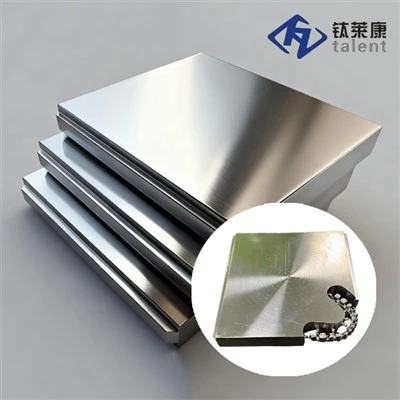
Medical Titanium Plates If you’re working on an orthopedic implant, dental fixture, or any other medical device that uses titanium bars, and you’re tired of dealing with suppliers who don’t get how big oxygen is to performance, hit us up. We can send you our full oxygen control protocols, talk through your project’s specific needs, or even send you a test batch to check for yourself. No pressure, just honest talk about what makes medical titanium actually work.
References
- Geetha, M., Singh, A. K., Asokamani, R., & Gogia, A. K. (2009). Ti based biomaterials, the ultimate choice for orthopaedic implants – A review. Progress in Materials Science, 54(3), 397-425.
- Long, M., & Rack, H. J. (1998). Titanium alloys in total joint replacement – A materials science perspective. Biomaterials, 19(17), 1621-1639.
- Niinomi, M. (1998). Mechanical properties of biomedical titanium alloys. Materials Science and Engineering: A, 243(1-2), 231-236.
- Kasuga, T., & Ito, A. (2000). Surface oxide layer of titanium and its interaction with biological tissues. Journal of Biomedical Materials Research, 51(4), 605-611.
- Mauer, J. L., & Pilliar, R. M. (1985). The effect of oxygen content on the mechanical properties of titanium alloys for surgical implants. Journal of Biomedical Materials Research, 19(8), 967-982.
Baoji Tailaikang High-Tech Metal Materials Co., Ltd.
With abundant experience, we are one of the most professional medical titanium bars manufacturers and suppliers in China. Please feel free to buy medical titanium bars for sale here and get pricelist from our factory. For price consultation, contact us.
Address: No. 1, Southeast Cross of Gaoxin Avenue and Fenghuang 3rd Road, High-tech Development Zone, Baoji City, Shaanxi Province, China
E-mail: sale@tlkjs.com
WebSite: https://www.tlkmetal.com/
