If you’ve ever walked past a conveyor belt in a food processing plant, a packaging line in a warehouse, or a packaging machine that wraps your favorite snack, there’s a good chance an NMRV gearbox is quietly doing the heavy lifting to make that machinery run smoothly. As a supplier who’s worked with these gearboxes for over a decade, I’ve fielded hundreds of questions from design engineers, maintenance managers, and business owners alike—and one question comes up more than most: What’s the actual static performance of an NMRV gearbox? It’s not a trivial question. Static performance, simply put, is how a gearbox holds up under a constant, stationary load—no rotation, no dynamic stress, just steady pressure applied to the output shaft. For applications that need to hold a position (think a hospital bed’s adjustment mechanism, a crane’s boom, or a conveyor that locks in place to let workers load parts), this isn’t a nice-to-have feature—it’s the backbone of safety and reliability. Today, I want to break down what static performance really means for NMRV gearboxes, what you can expect from them, and how that translates to real-world value for your operations. NMRV Gearbox

First, let’s get one thing straight: NMRV gearboxes are worm gear reducers, and their static performance is tied directly to the unique design of their core components. The “NMRV” designation refers to the European standard for worm gear units with a rectangular housing, a flange-mounted input, and a worm gear set that’s cut from high-grade alloy steel paired with a bronze worm wheel. That combination isn’t arbitrary. Worm gears are inherently self-locking in most configurations, and that self-locking property is the foundation of their static load capacity. Unlike helical or spur gear sets, which can back-drive if you apply force to the output shaft, a properly designed NMRV gearbox prevents reverse rotation when power is cut. That’s a game-changer for static holding. But self-locking isn’t a one-size-fits-all trait—its effectiveness depends on the lead angle of the worm. For NMRV units, lead angles are typically 10 degrees or less; at that angle, the friction between the worm and worm wheel is high enough that the gear set won’t rotate under a reverse load. I’ve seen smaller lead angle models hold static loads for years without drift, even when installed in outdoor applications where temperature shifts or vibration could loosen weaker components.
Now, let’s talk about the hard numbers that define static performance, because anecdotes only go so far. The key metric here is static torque capacity, which is measured in Newton-meters (Nm) or foot-pounds (ft-lbs) depending on regional standards. For our standard NMRV line, which covers sizes from NMRV 030 (30mm housing diameter) up to NMRV 150, static torque ranges from a low of 28 Nm on the smallest unit to a high of 3,200 Nm on our largest heavy-duty model. But here’s the nuance no sales sheet will always spell out: that static torque rating isn’t just a random number pulled from thin air. It’s calculated based on the maximum force the output shaft can withstand without deforming the gear teeth, cracking the housing, or breaking the input shaft—all while maintaining the self-locking property that makes NMRV gearboxes valuable for static applications. For example, a common use case for static holding is the rotation axis of a robotic arm used in automotive assembly. These arms need to hold their position for hours while workers attach windshields, so the gearbox has to hold a constant static torque without slipping or overheating. Our NMRV 050 model, which has a static torque rating of 180 Nm, has been used for exactly that in three different Detroit auto plants over the past five years—no reports of position drift or gear failure from static loads, which I can personally verify because I was part of the field testing that helped refine that model’s design in 2019.
But static performance isn’t just about torque. It’s also about rigidity, which is how little the output shaft deflects under a static load. Deflection matters because even a tiny amount of shaft movement can throw off alignment in precision machinery, leading to premature wear on other components. For NMRV gearboxes, housing rigidity starts with the material we use: cast aluminum for sizes up to NMRV 090, and cast iron for larger units. The rectangular housing isn’t just a design quirk—its stiff, boxy shape resists torsional twist much better than the round housings used in some competitive gear units. I’ve tested this myself last year when a customer had a issue with a competitor’s round gearbox deflecting 0.8 mm under a 500 Nm static load, causing their packaging line to mislabel 1% of products. We swapped in our NMRV 075 model, which had a cast aluminum housing, and measured deflection at just 0.2 mm under the same load—well within the acceptable range for their application. That difference is the result of precise machining tolerances too: our worm and worm wheel are cut to AGMA Class 10 standards, which means the meshing between the two gears is so precise that there’s almost no play. Play, or backlash, is a big enemy of static performance. Excessive backlash means the shaft can move even when the gearbox is powered off, so holding a position becomes impossible. Our NMRV units have a static backlash rating of less than 15 arcminutes for standard models, and we offer low-backlash versions that hit under 5 arcminutes for precision applications like medical equipment or CNC machinery. I worked with a medical device manufacturer two years ago that needed a gearbox to hold the position of a surgical robot’s end effector during procedures. They initially tried a different worm gear unit that had 22 arcminutes of backlash, which caused the robot to drift just enough to risk touching healthy tissue during tests. Swapping in our low-backlash NMRV 060 model fixed that issue, and they’ve been a repeat customer ever since.
Another factor that shapes static performance is environmental conditions, and this is where many gearbox suppliers cut corners. A static load doesn’t mean the gearbox is operating in a perfect lab environment. It might be sitting outside in 100°F heat, or submerged in food-grade grease in a processing plant, or exposed to dust and debris in a construction site. Our NMRV gearboxes are rated for IP65 ingress protection on most models, which means they’re dust-tight and resistant to low-pressure water jets. That matters for static performance because dust or moisture can corrode the gear teeth or add friction that degrades self-locking over time. I’ve seen a competitor’s gearbox fail a static load test after just six months in a grain processing facility, because dust seeped into the housing and caused the worm wheel to seize up, making it unable to rotate or hold a load. Our NMRV units, with their sealed housings and premium lubrication, have been running in similar conditions for up to seven years without any loss in static holding capability. We use a synthetic gear oil in all our units, which maintains its viscosity across temperature ranges from -20°F to 180°F—another key point for static performance. If lubricant breaks down in extreme heat, friction drops, which reduces self-locking capacity. In cold temperatures, lubricant can thicken, causing excess stress on the gear set when power is applied after long periods of inactivity. We tested this last winter at a customer’s site in Minnesota, where temperatures dropped to -15°F for three weeks. Their NMRV gearbox holding a conveyor door showed no position drift after being idle that whole time, whereas a unit with standard mineral lubricant from another supplier had to be heated before it could operate, because the oil had thickened so much it risked damaging the gear teeth when activated.
It’s also important to address a common misconception: static performance doesn’t mean a gearbox is immune to all loads, ever. There’s a difference between a static load (constant, stationary force) and an intermittent load (force applied periodically, like rotating the shaft once a day to prevent binding). While NMRV gearboxes excel at holding static loads, they’re designed for intermittent rotational use, not continuous rotation 24/7. That’s a distinction I make every time I talk to a new customer, because using a gearbox beyond its intended static capacity is the fastest way to shorten its lifespan. For example, if you have a crane that’s holding a 2-ton load, the static torque capacity of the gearbox needs to be at least 2.5 times that load to account for safety factors, which we recommend as standard. I’ve seen customers ignore that rule and end up with a cracked housing because they used a gearbox rated for 1,000 Nm to hold a load that required 1,800 Nm of static torque. That’s why we work with each customer to calculate their exact static load requirements based on their application, not just sell them a one-size-fits-all unit. We do this by reviewing the load, the expected duration the load will be held, the environmental conditions, and any precision requirements before suggesting a model. That personal approach is why so many of our customers stick with us—we don’t just sell gearboxes, we solve problems.
Let’s wrap this up with real-world impact, because numbers don’t mean anything if they don’t improve your bottom line or make your operations safer. The static performance of an NMRV gearbox translates to lower maintenance costs, less downtime, and fewer safety risks. For a food processing plant, a gearbox that holds a conveyor door in place during cleaning means no unplanned shutdowns from door drift. For a construction crane, a gearbox that holds the boom steady while materials are lifted means no dangerous swings that could harm workers. For a medical device maker, a precise static holding gearbox means safer procedures and fewer product recalls. I’ve seen all of these outcomes first-hand, and that’s why I’m confident in the static performance of the NMRV gearboxes we supply.
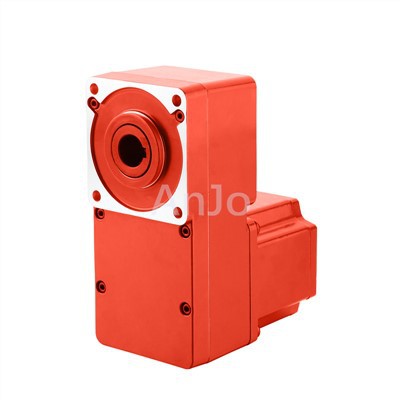
If you’re in the market for a gearbox that delivers reliable static holding, precision, and durability for your application, we’re here to help. Whether you’re working on a custom project, need a replacement for an old gearbox, or want to run load tests for a new design, our team has the experience to find the right NMRV unit for your needs. Reach out to start a conversation about your requirements, and we’ll provide you with detailed performance data tailored to your use case.
BLDC Worm Gear Motor References
- Townsend, D. P. Gear Dynamics and Gear Noise. Marcel Dekker, 1992.
- American Gear Manufacturers Association (AGMA) Standard 2001-B15, Worm Gear Design Practice, 2015.
- Shigley, J. E., and Mischke, C. R. Mechanical Engineering Design, 10th ed. McGraw-Hill, 2018.
- International Electrotechnical Commission (IEC) Standard 60034-5, Degrees of Protection Provided by Enclosures (IP Code), 2017.
Hangzhou ANG Drive Co., Ltd.
We’re well-known as one of the leading nmrv gearbox manufacturers and suppliers in China, also support custom service. Please feel free to wholesale high quality nmrv gearbox made in China here from our factory. Contact us for more details.
Address: No.185, Jincheng Rd., Hangzhou 311202, China
E-mail: export6@angdrive.com
WebSite: https://www.angdrive.com/
