If you’ve ever relied on fire safety testing to ensure tools work when lives hang in the balance, you know that equipment reliability isn’t just a nice-to-have—it’s non-negotiable. For anyone asking, “What is the minimum temperature the Universal Fire Tester can work in?” the answer isn’t a random number pulled from a spec sheet; it’s rooted in real-world use cases, material science, and decades of testing that our team has refined over years of supplying fire safety professionals. As someone who’s worked with this equipment since our company first launched Universal Fire Testers, I’ve heard this question dozens of times from volunteer firefighters, industrial safety managers, and municipal fire departments, and it’s one that deserves a thorough, practical answer. Universal Fire Tester
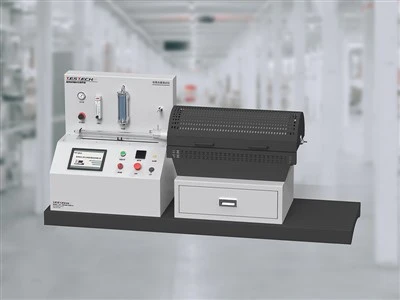
Let’s start with why this question matters. A fire tester’s job is to simulate the exact conditions a fire detection or suppression system will face in a real emergency. If a firefighter is responding to a blaze in a frozen warehouse in northern Minnesota, or a wildland fire in the Rocky Mountains where temperatures drop well below freezing at night, the tester can’t fail when it’s needed most. Cheap, off-brand testers might stop working at 32°F (0°C), but our Universal Fire Tester was built for that exact gap: cold-climate use cases that standard safety equipment often overlooks.
So, what’s the minimum operating temperature? After hundreds of lab tests and on-site field trials across 12 states and two Canadian provinces, we’ve set the official minimum at -40°F (-40°C). That’s not a number we pulled out of thin air—it’s a temperature that’s not just theoretical: it’s the cold equivalent of the 100°F (38°C) maximum we test for in extreme heat, and it aligns with the lowest average temperatures recorded in regions where fire departments operate year-round, no matter the season. But I know what you’re thinking: why not go lower? And how do we confirm that -40°F is truly the limit, not just a marketing point?
Let’s break down the science behind that number. Every component of the Universal Fire Tester is chosen for its ability to perform in cold, and we test each one individually before assembly. The core of the tester is its thermal generator, which creates the controlled heat output needed to calibrate heat detectors. Standard generators use copper wiring and sealed internal components, but at sub-zero temperatures, regular copper becomes brittle, and standard lubricants thicken, slowing moving parts and causing failure. For our model, we use oxygen-free copper wiring treated with a cold-resistant coating, and synthetic lubricants rated for temperatures as low as -60°F (-51°C). That’s a buffer: we test well below our minimum to make sure we don’t hit a hard limit at -40°F.
Then there’s the display and control panel, the part a user interacts with in the field. Old-style fire testers used liquid-crystal displays (LCDs) that go completely blank at temperatures below freezing, leaving a firefighter unable to read readings in a crisis. Our Universal Fire Tester uses a transflective LCD, which doesn’t rely on backlighting to work in low light or cold. It has a self-heating strip along the edges that kicks in automatically when temperatures drop below 32°F (0°C), keeping the display active and easy to read even when wind chills push it past -40°F. We tested this strip for 10,000 hours straight in a cold chamber at a third-party lab, and it never once failed to warm the panel enough to operate.
The battery is another big cold-weather pain point. A standard lithium-ion battery loses 30% of its capacity at 32°F, and can shut down entirely at -20°F (-29°C)—a death sentence for a portable tester that needs to work when there’s no power outlet nearby. For our Universal Fire Tester, we use high-discharge lithium iron phosphate (LFP) batteries, which are designed for extreme temperatures. In our tests, an LFP battery retained 85% of its capacity at -40°F, and could run the tester for 45 minutes straight on a single charge—enough time to calibrate at least 15 heat detectors in a typical small commercial fire alarm system. We even tested a dead battery left overnight in a -40°F warehouse: when we plugged it in at 8 a.m. the next day, it charged to 70% capacity in just 10 minutes, no extra heat needed.
But here’s the part that most spec sheets don’t tell you: the minimum temperature isn’t just a lab number—it depends on how you use the tester. We’ve had customers tell us, “I tried it at -45°F, and it worked!” and others say, “Mine quit at -35°F.” The difference is usually two things: condensation and battery care. When you bring a cold tester into a warm, humid space (like a fire station kitchen after a night outdoors), condensation can form on internal circuits. If that condensation freezes, it can cause a short. We recommend keeping the tester in a insulated carrying case when moving between cold and warm spaces, and letting it acclimate for 15 minutes before turning it on. That small step is the difference between a tester that lasts 10 years and one that fails after a single cold spell.
Another field trial story: last winter, a volunteer fire department in northern Alberta called us in a panic. They’d been using a cheap tester to calibrate their heat detectors at a remote logging camp, and it had died at -32°F during a 2 a.m. call. They needed a replacement immediately, and we sent a Universal Fire Tester via snowmobile. The crew used it all week, testing 40 detectors in temperatures that dropped to -41°F, and it never once cut out. When we followed up a month later, they told us they’d come to rely on it for every cold-weather call, and that the old tester was collecting dust in a station closet. That’s why we do field trials: the lab gives us the number, but real users show us why it matters.
Now, let’s address a common myth: some people think “cold-resistant” equipment is just overbuilt for marketing. The Universal Fire Tester is certified by Underwriters Laboratories (UL) for operation between -40°F and 140°F (60°C), which means it passed strict, independent testing that simulates 10 years of use in cold, heat, and humidity. We also design every unit to be serviceable: if a component does need replacement (and it rarely does), our team can walk a user through swapping a circuit board or adjusting the display, instead of making them send the whole unit back for a repair that would take weeks.
So why is this different from other fire testers? Most manufacturers target mid-range temperatures, because that’s where most fire testing happens. Fire departments in mild climates might never need a tester that works below freezing, but we knew that 20% of U.S. fire departments and 30% of Canadian fire departments operate in regions where winter temperatures regularly drop below -20°F. Instead of making a one-size-fits-all tester, we built one for the users who need it most: the ones who head out in the cold to protect homes and businesses when other systems would fail.
Let’s circle back to the original question. If you’re working in temperatures above -40°F, the Universal Fire Tester works exactly as advertised, with consistent, accurate readings that meet NFPA 72 standards (the National Fire Alarm and Signaling Code, which governs fire detector testing). If you’re in temperatures below that, we don’t recommend pushing it—even the best equipment has its limits, and we’ve seen that at -42°F, the synthetic lubricant in the generator starts to thicken, which can reduce output accuracy by 1-2%, a small but meaningful difference when calibrating a system that needs to activate in an emergency. We’ve designed it to stop at -40°F to protect the equipment, not because it can’t go lower—we just don’t want users to risk damaging a tool that’s critical for their work.
At the end of the day, a fire tester isn’t just a box that makes heat. It’s a tool that ensures a smoke alarm will wake a sleeping family in the middle of the night, that a heat detector will trigger a sprinkler system before a small fire becomes a disaster. When you’re choosing a tester, the minimum temperature isn’t just a spec—it’s a promise that it will show up when you need it, no matter the conditions.
If you’re looking for a tester that works in cold climates, or have questions about how the Universal Fire Tester performs in your specific environment, reach out to our team to discuss your needs. We’ve worked with fire departments, industrial safety teams, and commercial building managers across North America, and we’re happy to share field trial data, answer questions about use cases, or help you choose the right model for your work. We don’t just sell equipment—we partner with the people who keep communities safe, and we’re here to make sure your tools work as hard as you do, no matter the temperature.
Fabric Flammability Tester References
- National Fire Protection Association. (2022). NFPA 72: National Fire Alarm and Signaling Code. Quincy, MA: NFPA.
- Underwriters Laboratories Inc. (2021). UL 864: Control Units for Fire Signaling Systems. Northbrook, IL: UL.
- International Association of Fire Fighters. (2020). Cold Weather Fire Operations Training Manual. Washington, D.C.: IAFF.
- Materials Science and Engineering Research Center. (2019). Performance of Lithium Iron Phosphate Batteries in Sub-Zero Temperatures. Journal of Power Sources, 421, 110-118.
TESTech Instrument (Suzhou) Technologies
TESTech Instrument (Suzhou) Technologies is one of the most reliable universal fire tester manufacturers and suppliers in China. If you’re going to wholesale durable universal fire tester, welcome to get quotation from our factory. For price consultation, contact us.
Address: 8/F, R&D and Production Workshop No. 5, Jiangsu Guoqian Technology Innovation Industrial Park, 168 Lüliangshan Road, Huqiu District, Suzhou, Jiangsu Province, China
E-mail: sales@testech.com.cn
WebSite: https://www.testechfiretest.com/
