Yo, what’s up everyone! I’m a supplier of PVC Pipe Machines, and I’ve been getting a lot of questions lately from customers about why their machines are showing low output. It’s a pretty common headache, so I thought I’d share some insights on the possible reasons. PVC Pipe Machine
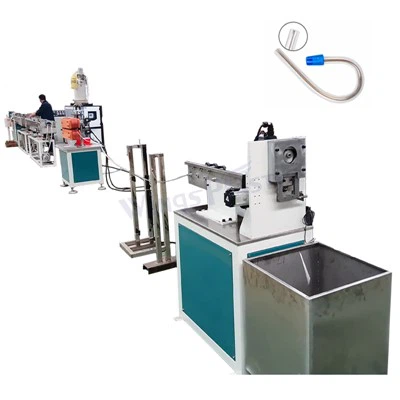
First off, let’s talk about raw materials. The quality of PVC resin used in the process can have a huge impact on the output of your machine. If the resin has impurities or inconsistent particle size, it can mess up the extrusion process. Think about it this way: when you’re trying to push something through a narrow opening, and the stuff you’re pushing has chunks or uneven bits, it’s gonna slow things down. For PVC resin, impurities can clog the machine’s dies and screws, which in turn reduces the amount of material that can be processed smoothly. Also, if the moisture content in the PVC resin is too high, it can cause bubbles in the pipes, and the machine has to work harder to compensate for that. You’ll end up with a lower output rate because the machine has to take extra time to deal with these issues.
Another factor is the temperature control during the extrusion process. PVC is a thermoplastic, which means it needs to be heated to a certain temperature to become malleable and be shaped into pipes. If the temperature is too low, the PVC won’t flow properly through the machine. It’ll be like trying to squeeze thick honey through a tiny straw – it takes forever and results in a slow output. On the other hand, if the temperature is too high, the PVC can degrade. When it degrades, it becomes sticky and can stick to the machine parts, causing jams and reducing the overall output. So, getting the temperature just right is crucial. The extrusion zone, for example, usually needs to be heated within a specific range, and the same goes for the die and the cooling zone.
Now, let’s look at the machine itself. The screw design plays a big role in the output. The screw is responsible for pushing the PVC material through the machine, and different screw designs are suitable for different types of PVC pipes. If the screw pitch is too small, it can limit the amount of material that can be conveyed at once, leading to a lower output. Also, over time, the screw can wear out. As it wears, it loses its ability to push the material efficiently, and you’ll notice a drop in output. The same goes for the barrel. If the inner surface of the barrel is worn, it can affect the compression and melting of the PVC, which again impacts the output.
The working speed of the machine is also a key factor. Sometimes, operators set the speed too low to ensure the quality of the pipes, but this can obviously lead to a low output. However, setting the speed too high can also cause problems. If the machine is running too fast, the PVC might not be properly melted or shaped, resulting in defective pipes. And when you have a high rate of defective pipes, you have to stop the machine to remove them and make adjustments, which reduces the overall output. There’s a sweet spot for the working speed that you need to find based on the type of PVC and the machine’s capabilities.
Maintenance is another area that can’t be ignored. A lack of regular maintenance can lead to all sorts of problems. For example, if the lubrication system is not working properly, the moving parts of the machine will experience more friction. This not only increases the wear and tear of the parts but also makes the machine less efficient. It has to use more energy to overcome the friction, and that can slow down the whole process. Also, if there are any loose or damaged machine parts, it can cause vibrations and misalignments, which can disrupt the normal operation of the machine and reduce output.
The die design is also important. The die is what gives the PVC pipe its shape. If the die is not designed correctly for the specific pipe size and wall thickness you’re producing, it can cause problems. For instance, if the die has a rough surface, it can increase the resistance of the PVC material as it passes through, slowing down the output. Also, if the die is not properly sized or its flow channels are blocked, it can lead to a decrease in the amount of PVC that can be extruded per unit of time.
Operator skill is another factor. I’ve seen cases where new operators are not fully trained on how to operate the PVC Pipe Machine. They might not know how to adjust the parameters correctly, such as the temperature, speed, and pressure. This can lead to a lot of trial – and – error, which means the machine is not running at its optimal performance. And of course, inexperienced operators are more likely to make mistakes that can cause the machine to stop or produce defective pipes, all of which contribute to a lower output.
Lastly, the power supply to the machine can be an issue. If the power supply is unstable, it can cause the motor to run unevenly. When the motor doesn’t run smoothly, it affects the overall operation of the machine. For example, the screw might not rotate at a constant speed, which can disrupt the flow of the PVC material and result in a lower output.
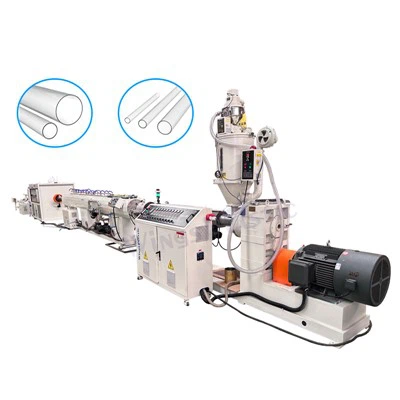
So, there you have it, folks! These are some of the possible reasons for the low output of a PVC Pipe Machine. If you’re experiencing low output with your machine, you might want to check these areas one by one. And if you’re in the market for a new PVC Pipe Machine or need some advice on improving the output of your existing one, don’t hesitate to reach out. We’re here to help you get the most out of your investment.
PPR Pipe Machine References
- Plastics Extrusion Handbook, by Walter Michaeli
- PVC Pipe Manufacturing Technology, various industry research papers
Qingdao Wings Plastic Technology Co., Ltd.
As one of the most experienced pvc pipe machine manufacturers and suppliers in China, we also support customized service. Please feel free to buy durable pvc pipe machine made in China here from our factory. For price consultation, contact us.
Address: C02 Of Anshengyi Road, No.2 Fuan Industry Zone,Jiaodong Town, Jiaozhou City, Qingdao City, Shandong Province,China
E-mail: kelly@wingsplastic.com
WebSite: https://www.wingsextruder.com/
