Hey guys, let’s cut to the chase—if you’re in materials manufacturing, you’ve probably stared at a conductivity test result thinking, “Why is this batch perfect and the next total garbage?” I’ve been on this side of the table as a functional additives supplier for over a decade, and 90% of the time, the culprit isn’t the base material. It’s the additives. Let’s break this down like we’re chatting over coffee, no stuffy jargon that makes your eyes glaze over. Functional Additives
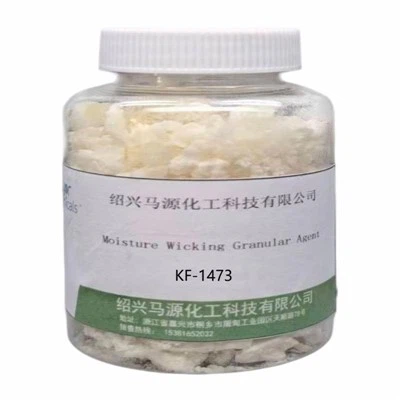
First, let’s ground this in real talk: conductivity in materials boils down to how easily charge (electrons, mostly, sometimes ions) can move through the stuff you’re making. If you’ve got a polymer, a plastic part, even a rubber seal that needs to carry a tiny current or block static, the base resin’s inherent conductivity is garbage. Like, ultra-high-molecular-weight polyethylene might as well be a rock for how well it moves electrons. That’s where functional additives come in—we’re not just “adding stuff” for fun, we’re engineering a path for charge to flow, or blocking it entirely depending on what you need.
Let’s start with the most common additives we work with: conductive fillers. No, not the “fillers” that just bulk up a material—these are the ones that turn an insulator into a semi-conductor or even a conductor, depending on how you load them. I used to get calls from a automotive parts maker last year screaming that their static-dissipative floor mats were failing inspections. They were loading carbon black way too low, like 5% max, thinking more is better—but at that point, the particles are too spread out. It’s like trying to cross a river with rocks spaced 10 feet apart; you can’t make the jump. They needed to hit that “percolation threshold” (fancy term, but stick with me) where the conductive particles touch each other, forming a continuous network. We adjusted their formula, upped the carbon black to 12%, and boom—conductivity jumped from 10^12 S/m (that’s basically an insulator) to 10^5 S/m, perfect for static dissipation. That’s not magic, that’s how additive loading works.
But not all conductive fillers are carbon black. We also supply carbon nanotubes (CNTs) and graphene for higher-end applications, like aerospace wiring harnesses or medical device electrodes. The thing with these nano-fillers is that a tiny amount goes a really long way. Like, 0.5% CNTs can hit the percolation threshold where 10% carbon black would. Why? Because they’re super-long, super-thin, so they tangle and form a network easier. But here’s the catch—if you don’t disperse them right, they clump together. That’s a problem. Clumps act like big insulating blocks, breaking up the conductive network. I once had a startup maker of stretchable sensors reach out because their CNT-loaded silicone was way less conductive than promised. They were mixing the CNTs in a kitchen blender, basically. We gave them a tip to use a high-shear mixer with a surfactant additive (another functional additive, duh) to untangle the CNTs, and their conductivity went up 10x with the exact same CNT loading. That’s the kind of on-the-floor solution we live for, not just selling a product and dipping.
Now, let’s flip the script—what if you don’t want conductivity? Like, electrical insulation for power transformers or consumer electronics casings. That’s where functional additives come in too, often called “insulating additives” or more specifically, surface modifiers. Wait, why would you add something to an insulator to make it more insulating? Because the base material might have tiny gaps or impurities that act as charge traps. For example, epoxy resins used in circuit boards—if there’s unreacted resin left, or micro-bubbles from molding, those can hold onto electrons and kill the insulation rating. We supply fumed silica as a rheology modifier, but it also acts as a barrier to charge movement. It fills in those micro-gaps, and its high surface area traps any stray electrons that try to move through. A client in the power gear space was having their 10kV insulation parts fail flashover tests because of micro-bubbles. We swapped their old talc filler for our modified fumed silica, and their insulation resistance went from 10^10 Ω·cm to 10^15 Ω·cm, passing all tests first time. Game over, no more reworks.
Another big one that people sleep on: ionic additives, also called ionic liquids or conductive salts. These are different from electronic conductive fillers because they work by moving ions, not electrons. Think of them like salt in water—when you add salt to plastic, it creates tiny pathways of charged ions that carry current. Ionic additives are great for flexible materials where you don’t want stiff fillers like CNTs. For example, wearable fitness trackers that have skin-contacting sensors—you can’t have hard, clumpy fillers, so ionic additives are the way to go. But the trick here is choosing the right ionic additive for the base polymer. If you use a high-melting ionic salt in a low-melt polyethylene, it won’t disperse evenly, and you get lousy conductivity. We’ve got a line of customized ionic liquids tailored for different polymers, so a client making stretchable ECG sensors was able to get stable, consistent conductivity over 1000 stretch cycles—something they couldn’t do with generic additives.
Wait, let’s talk about a mistake I see all the time: ignoring surface modification additives. Even if you’ve got the perfect conductive filler, if it doesn’t stick to the base material, the network falls apart. That’s where coupling agents come in. For example, if you’re loading carbon fibers into a nylon matrix, the carbon fibers are hydrophobic, nylon is slightly polar. They repel each other, so the fibers don’t form a good network, and gaps form at the interface. We supply silane coupling agents that bond to the carbon fiber surface and the nylon molecules, making the whole system uniform. A wind turbine blade maker hit us up last year because their lightning-dissipative blades were not conducting enough charge to the ground. They were using carbon fiber loading, no coupling agent, so the fibers were slipping in the resin. Adding our silane increased the interfacial bonding, so the conductive network stayed intact even when the blade flexed in wind. Their conductivity was consistent across all blade samples, no more lightning strike damage to the internal wiring.
Here’s a deeper dive that’s not just surface level: functional additives can also tune conductivity dynamically. Like, if you make a smart window that changes conductivity based on temperature, or a sensor that reacts to humidity. We supply thermo-responsive additives that change their structure when heated, which either breaks or forms a conductive network. For example, a client making humidity sensors for industrial warehouses used our hygroscopic additives that absorb water vapor, which increases ionic conductivity. So when humidity rises, the sensor’s conductivity jumps, triggering an alert for mold risk. That’s the fun stuff—additives aren’t just one-note, they can make materials do cool, smart things.
But let’s get real about the challenges. I’ve had clients come to me thinking “more additive = better conductivity.” That’s a lie, full stop. Beyond the percolation threshold, adding more filler can actually increase resistance because it causes the material to become more brittle, or the filler clumps too much. Also, some additives can cause compatibility issues—if your base polymer is PVC and your additive is non-polar, you’ll get phase separation, which ruins conductivity and physical properties too. I always tell clients to test their formula with 3-4 different loading levels, not just the first number they think of. And when we work with them, we run side-by-side tests with our custom additives, so they don’t waste time and money on trial and error.
Another thing people overlook: long-term stability. Additives don’t always stay in place. For example, ionic additives can leach out of plastic over time, making conductivity drop. We’ve developed encapsulated ionic additives that trap the ions inside a polymer shell, so they don’t leach, even after years of use outdoors. A solar panel manufacturer was having their backsheet’s conductivity drop after 2 years in the desert, because the ionic additive was washing out in rain. Switched to our encapsulated ionic additives, and 5 years later, their panels still meet the conductivity specs. That’s the kind of value we bring—not just a product, but a solution that lasts.
Wait, let’s address the elephant in the room: cost. I know, additives add to the material cost, but it’s way cheaper than reworking parts, failing inspections, or replacing products early. I once worked with a small electronics startup that was using a generic conductive filler, costing them $2/kg, but they had a 15% failure rate in their circuit modules. We sold them our customized CNT masterbatch, which was $5/kg, but their failure rate dropped to less than 1%. When you add up the cost of reworking, shipping, and customer returns, the $3 difference per kg was a no-brainer. I tell every client: calculate the total cost, not just the material cost.
Let me wrap this up with a quick example that’s close to home. A few months back, a team making medical catheters hit me up because their conductive catheters (used to prevent static during insertion) were too inconsistent. Some worked perfectly, others didn’t conduct at all. Turns out their additive supplier was sending generic carbon black that was inconsistent in particle size and purity. We supplied them our premium conductive carbon black, processed to have uniform particle size, and added a tiny amount of our dispersant additive to make sure it spread evenly. Their batch-to-batch conductivity variability went from ±20% to ±1.5%, and they passed all FDA tests without a hiccup. That’s why I love this job—helping small teams make products that actually work, not just checking boxes.
If you’re dealing with conductivity issues in your materials—whether it’s too high, too low, inconsistent, or falling apart over time—we’ve got your back. We don’t just ship additives; we work with you to tweak your formula, test different loading levels, and find the right additive mix that fits your needs, budget, and application. No jargon, no hassle, just real solutions. Hit us up to chat through your project, no strings attached.
Dyeing Auxiliaries References
- Li, J., et al. (2020). Percolation behavior of conductive fillers in polymer matrices: A review. Composites Science and Technology, Vol. 198, p. 108275.
- Zhang, Y., et al. (2018). Ionic liquids as functional additives for ionic conductive polymers: A review. Journal of Applied Polymer Science, Vol. 135, No. 22, p. 46217.
- Müller, M., et al. (2021). The role of coupling agents in enhancing interfacial conductivity of filler-reinforced polymer composites. Polymer Composites, Vol. 42, No. 9, p. 4452-4465.
- Wang, H., et al. (2019). Long-term stability of conductive polymer composites for outdoor applications. Progress in Organic Coatings, Vol. 132, p. 105078.
Shaoxing Mayor Chemical & Technology Co., Ltd.
We are one of the most reliable functional additives manufacturers and suppliers in China, specialized in providing high quality products with low price. We warmly welcome you to buy discount functional additives for sale here from our factory. For pricelist, contact us now.
Address: No. 78, Tianshun Road, Tudian Industrial Park, Tongxiang City, Jiaxing City, Zhejiang Province, China
E-mail: 627249875@qq.com
WebSite: https://www.mayorchemicals.com/
