If you’ve ever walked past a construction site or attended a renovation, chances are you’ve glanced at tube and clamp scaffolding, the silver-gray network of steel tubes and adjustable clamps that lets workers reach high places safely. As a supplier of this type of scaffolding, I get asked a lot of questions about its compliance, and one that comes up more often than you’d expect is: Is tube and clamp scaffolding actually compliant with international standards? The short answer is yes—but only if it’s built, tested, and used the right way. And that’s the part I wish more builders, contractors, and even some site foremen understand, because non-compliant scaffolding isn’t just a red flag for inspectors—it’s a safety hazard waiting to happen. Tube And Clamp Scaffolding
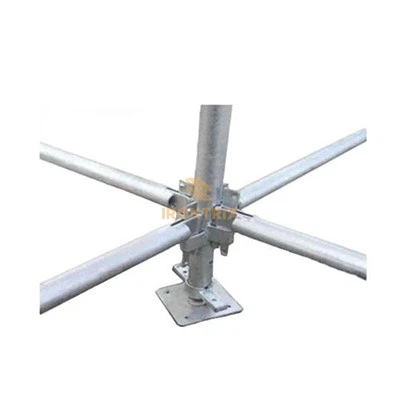
Let’s start with what tube and clamp scaffolding actually is, for anyone who’s not in the trade full-time. Unlike system scaffolding, which comes with pre-fabricated frames and fixed couplers, tube and clamp is a modular setup: individual steel (or sometimes aluminum) tubes of varying lengths, connected by clamps (or “couplers”) that you adjust on-site to fit whatever space you’re working with. It’s versatile, which is why it’s been around for over a century—we still use it for everything from small residential roof repairs to large commercial building retrofits. But that versatility is also where the confusion about compliance comes in. Because when it’s not mass-produced in a fixed system, it’s easy to cut corners, mix parts that don’t work together, or skip steps that make it meet global safety rules.
Now, the big question: which international standards are we talking about here? There isn’t a single global rulebook, but most regions align on a set of core standards from organizations like the International Organization for Standardization (ISO), and regional bodies like the European Committee for Standardization (CEN) in the EU, the Occupational Safety and Health Administration (OSHA) in the U.S., and Safe Work Australia. Let’s break down what those standards actually require for tube and clamp, not just the vague “it has to be safe” stuff.
First, the tubes themselves. Most international standards (ISO 1461, which covers hot-dip galvanized steel, and CEN EN 39, specifically for scaffolding tubes) say that steel tubes must be made from mild steel, have a specific outer diameter—usually 48.3 mm, that’s the standard size everywhere except a small number of countries that use 51 mm—and a wall thickness of at least 3.2 mm. If a tube is thinner than that, it can’t support the weight of workers, tools, and materials without bending, which is how collapses start. Aluminum tubes, which are lighter for smaller jobs, have their own set of rules under ISO 10210, and they can only be used for specific load limits. I’ve seen some cheap imported tubes cut to the wrong thickness, or even made from leftover car parts (yes, that’s a real thing I heard about from a contractor who bought cheap kit), and those are instant non-compliant.
Then there are the clamps, the parts that hold the tubes together. This is the area where most mistakes happen, in my experience. There are three main types of clamps for tube and clamp scaffolding: couplers. First, the right-angle coupler (used to connect two tubes at 90 degrees, like a horizontal ledge to a vertical post), second, the swivel coupler (for connecting tubes at any angle, like when you’re scaffolding around a curved wall), and third, the putlog coupler (used to attach a tube to a building wall). Standards like CEN EN 74 and ISO 15581 specify the exact load each coupler can hold, and they require that they’re made from cast steel, not pressed steel. Pressed steel couplers are cheaper, but they can crack under pressure—especially in cold weather—and they don’t meet compliance. Also, a lot of people mix old couplers with new tubes, or vice versa. If a clamp is worn, has rust that’s flaking, or the bolt that tightens it is stripped, that’s not just worn—it’s a safety violation. OSHA actually has a rule that says couplers must be inspected every time scaffolding is erected, and any that don’t meet the standard have to be replaced immediately.
Next, load requirements. International standards set specific maximum loads for tube and clamp scaffolding, and they vary based on how the scaffolding is set up. A standard scaffolding for light use (like painting or plastering) is usually rated for 2 kN per square meter (that’s about 200 kg per square meter), while heavy-duty scaffolding for bricklaying or material storage is rated for up to 5 kN per square meter. The standards also require guardrails, toe boards, and intermediate rails on all working platforms higher than 2 meters, and they mandate that the scaffolding is tied to the building at specific intervals—usually every 4 meters vertically and every 6 meters horizontally—to prevent it from swaying or tipping. I’ve seen a lot of small contractors cut corners here: they skip the ties to save time, or use less than the required number of guardrails, and that’s when accidents happen. Last year, I worked with a contractor who bought a cheap tube and clamp kit from a supplier that didn’t label their load ratings, and he had to take it all down when the local inspector came by and tagged it non-compliant. That cost him thousands in wasted labor and materials, so I always tell my customers: if a kit doesn’t come with clear load rating labels, that’s a red flag.
Wait, but what about when scaffolding is used for temporary jobs, like a one-day repair? Does the same standard apply? The short answer is yes—even a small, temporary scaffold for changing a roof tile has to meet the same basic requirements for tube thickness, coupler strength, and guardrails. OSHA actually has a rule that says any scaffold over 10 feet (about 3 meters) high must be designed by a qualified person, and inspected before use, regardless of how temporary it is. I’ve had customers ask me, “It’s just a small scaffold for my own house, can’t I skip the fancy parts?” and I always say: you can, but you’re also putting yourself at risk, and if you get hurt, your insurance won’t cover it if it’s non-compliant.
Now, the elephant in the room: certification. How do you know that the tube and clamp scaffolding you’re buying is actually compliant? That’s where a lot of suppliers cut corners. A lot of cheap, unbranded scaffolding sold online or at hardware stores doesn’t have third-party certification, which is the only way to prove it meets international standards. The key certifications here are ISO 9001 for quality management, and specific scaffolding certifications like EN 1090 for construction products, or ANSI/ASSP A10.9 in the U.S. for scaffolding safety. If a supplier can’t show you those certificates, or if the certificates are outdated or from an unrecognized body, the scaffolding is not compliant. I’ve seen a lot of cases where a supplier will print “ISO certified” on the packaging, but when you check, it’s for something unrelated, like their office equipment, not their scaffolding parts. That’s a trick I’ve seen too many times, and it’s why I make sure every single tube and coupler we sell has its certification number printed on it, so our customers can verify it themselves online.
Another thing that’s often overlooked: training. Compliance isn’t just about the parts—it’s about how you put the scaffolding together and use it. Even if you have perfectly compliant tubes and clamps, if the person erecting it doesn’t know how to space the ties correctly, or how tight to tighten the coupler bolts (they need to be tightened to 40-60 Nm of torque, by the way—too loose and they slip, too tight and they crack), it’s not going to be safe. International standards like ISO 19901-1 actually have guidelines for training scaffolders, and most countries require that anyone erecting scaffolding has a valid certification. As a supplier, we don’t just sell parts—we also offer free training guides for our customers, because I know that even the best parts won’t help if they’re put together wrong.
I get asked a lot why compliance matters so much, beyond just passing inspections. The cost of a collapse is way higher than the cost of buying compliant parts. A friend of mine runs a small construction company, and a few years ago, a non-compliant scaffolding he rented from a cheap supplier collapsed, injuring two workers. He had to pay millions in medical bills and lost wages, and his company’s reputation took years to recover. Non-compliant scaffolding isn’t just a safety risk—it’s a financial and legal risk too. Most countries have heavy fines for non-compliant scaffolding, and if someone is hurt or killed, the person who erected it, the company that hired it, and even the supplier can be held liable.
Now, let’s get back to the original question: Is tube and clamp scaffolding compliant with international standards? It can be. But it’s not a given. It depends on the parts you use, how they’re made, how they’re put together, and how they’re maintained. There are plenty of reputable suppliers like us who sell compliant, tested tube and clamp scaffolding that meets all international standards, but there are also a lot of unregulated suppliers selling parts that don’t come close.
As someone who’s been in this business for over 15 years, I’ve seen the good, the bad, and the ugly of tube and clamp scaffolding. I’ve watched a well-built, compliant scaffold let a painter work safely at height for weeks, and I’ve seen a shoddy, non-compliant one collapse before the first worker even stepped on it. The difference is always attention to detail. It’s not just about the tubes and clamps—it’s about choosing parts with proper certification, following the standards for load and setup, making sure your workers are trained, and inspecting the scaffold every single time before use.
If you’re in the market for tube and clamp scaffolding, my advice is simple: don’t cut corners. Ask for certification, check the tube thickness and coupler type, make sure you have clear instructions for setup, and only work with a supplier who stands behind their product. At the end of the day, the best construction sites are the ones where workers go home safe at the end of the day, and that starts with scaffolding that meets the rules.

If you have more questions about compliant tube and clamp scaffolding, or you’re ready to discuss your project and find the right solution for your needs, feel free to reach out to us for a consultation.
Scaffold Couplers References
ISO 1461: Hot-dip galvanized coatings on fabricated iron and steel items – Specifications and test methods
CEN EN 39: Steel tubes for scaffolding – Requirements and test methods
CEN EN 74: Couplers for use with steel tubes for scaffolding – Requirements and test methods
OSHA 1926 Subpart L: Scaffolds (U.S. Occupational Safety and Health Administration)
Safe Work Australia Model Code of Practice: Scaffold Safety
Tianjin Irontrix Co., Ltd.
As one of the most professional tube and clamp scaffolding manufacturers and suppliers in China, we offer a wide range of products with superior quality. Please rest assured to wholesale bulk durable tube and clamp scaffolding made in China here from our factory. Contact us for more details.
Address: No.60 Jingwang Road, Daqiuzhuang Town, Jinghai District, Tianjin City, China
E-mail: info@irontrix.com
WebSite: https://www.irontrixscaffold.com/
